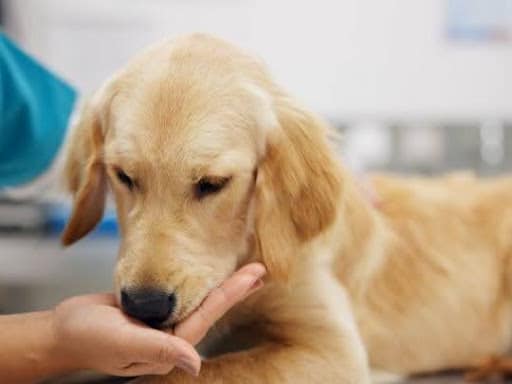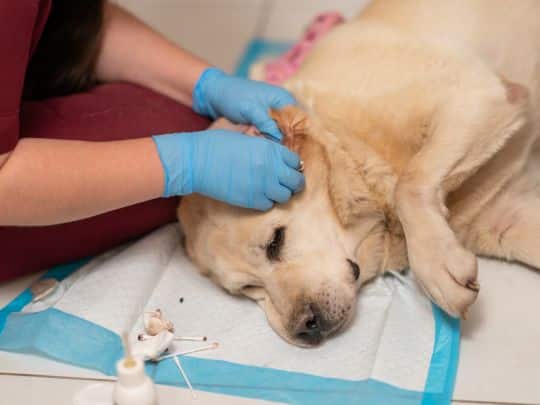
A once-floppy ear that suddenly becomes thick, tight, and pillow-like can catch any dog owner off guard. This type of swelling may be a dog ear hematoma, a pocket of blood that collects between the skin and cartilage of the ear flap. It often develops after vigorous head shaking or scratching triggered by an ear infection, allergies, ear mites, or another source of irritation.
While an ear hematoma is rarely life-threatening on its own, leaving it untreated can lead to permanent scarring and a thickened, cauliflower-shaped ear. Dogs with long or floppy ears, including Labradors, Cocker Spaniels, and Basset Hounds, may be more prone to ear problems that contribute to hematomas.
If your dog is pawing at one ear, tilting their head, or has sudden swelling of the ear flap, a prompt veterinary evaluation can help identify the underlying cause and determine the appropriate treatment.
What Is a Dog Ear Hematoma?
A hematoma is a blood-filled swelling that forms between the skin and cartilage of the ear flap. It occurs when small blood vessels break, usually because repeated head shaking or scratching puts stress on the delicate blood vessels in the ear. Blood then collects beneath the skin, creating a soft, firm, or fluid-filled swelling.
Many pet owners begin researching ear hematoma treatment options for dogs as soon as they notice swelling. Prompt veterinary care is important because the longer a hematoma remains untreated, the greater the potential for scar tissue and permanent changes to the ear’s shape.
An ear hematoma may also be a sign that another ear problem needs attention. Ear infections, allergies, parasites, and foreign material can cause itching and discomfort that lead to repeated scratching or head shaking.
Signs Your Dog’s Ear Swelling Needs a Vet Visit
Watch for these signs if your dog’s ear suddenly appears swollen:
- Sudden swelling on one ear: The ear flap may feel firm, warm, or unusually thick.
- Frequent head shaking or scratching: Your dog may repeatedly paw at or rub the affected ear.
- Head tilting: Your dog may hold their head to one side because of ear discomfort.
- Redness, odor, or discharge: These symptoms may indicate an underlying ear infection.
- Sensitivity around the ear: Your dog may pull away or become uncomfortable when the ear is touched.
Pet owners may notice sudden ear swelling; dog symptoms may appear within a short period. A sudden change in the ear, particularly when accompanied by scratching or head shaking, should not be ignored. A veterinary examination can determine whether the swelling is a hematoma and identify the problem that caused the irritation.
What Happens During an Ear Hematoma Exam?
Bringing your dog in for a swollen ear is usually a straightforward process. Your veterinarian will evaluate both the swollen ear flap and the ear canal to determine what may be causing the problem.
During an examination, your veterinarian may:
- Examine the ear canal for infection, parasites, inflammation, or debris.
- Gently examine the ear flap to determine whether the swelling is consistent with a hematoma.
- Discuss treatment options if drainage or dog ear hematoma surgery is appropriate.
- Recommend pain relief or sedation when needed to keep your dog comfortable.
- Provide aftercare instructions and discuss ways to address the underlying cause.
Treatment depends on the size of the hematoma, the condition of the ear, your dog’s comfort level, and the underlying cause. Some cases may require drainage or surgery, while treatment of an underlying ear infection or allergy may also be necessary.
Why Florida’s Climate Can Contribute to Ear Problems
Florida’s warm, humid climate can contribute to moisture and irritation in a dog’s ears. Dogs with floppy or hairy ears may be particularly susceptible to ear problems because moisture and debris can become trapped inside the ear canal.
When an ear becomes irritated, a dog may respond by scratching or shaking their head repeatedly. This repeated trauma can damage small blood vessels in the ear flap and contribute to an ear hematoma.
A common misconception is that ear hematomas only occur after a direct injury or fight. In many cases, the underlying trigger is an itchy or painful ear caused by an infection, allergy, parasite, or another source of irritation.
If your dog develops sudden swelling or appears painful, looking for urgent vet care in Pompano Beach promptly can help prevent the problem from worsening.
Getting Fast, Compassionate Care for Your Dog’s Ear
If your dog’s ear looks swollen, painful, or unusually thick, do not wait for the problem to resolve without veterinary guidance. Acacia Animal Hospital in Pompano Beach provides veterinary care for dogs experiencing ear problems, infections, hematomas, and other conditions that can cause discomfort.
A veterinary examination can determine whether your dog’s swelling is an ear hematoma and whether treatment is needed. Addressing the underlying cause is also important because continued scratching or head shaking can contribute to recurrence.
Families searching for urgent vet care in Pompano Beach can contact Acacia Animal Hospital at 954-942-5955 to discuss their dog’s symptoms and determine the appropriate next step.
A dog ear hematoma can look alarming, but prompt veterinary attention can help your dog receive appropriate treatment and reduce the risk of permanent changes to the ear. Watch for sudden swelling, head shaking, scratching, redness, odor, or discharge, and contact your veterinarian when these symptoms appear. Book an appointment today.
Frequently Asked Questions
1. What does a dog ear hematoma look like?
Ans: A dog ear hematoma usually appears as a soft, firm, or fluid-filled swelling on the ear flap. The affected ear may look noticeably thicker or puffier than the other ear and may feel warm or tender.
2. Will a dog ear hematoma go away on its own?
Ans: Some small hematomas may gradually reabsorb, but veterinary evaluation is recommended. Without appropriate treatment, a hematoma may result in significant scar tissue and permanent thickening or changes in the ear’s shape.
3. What causes a dog’s ear to suddenly swell?
Ans: Sudden ear swelling can occur when head shaking or scratching damages small blood vessels in the ear flap. This behavior may be triggered by an ear infection, allergies, parasites, or another source of irritation.
4. How can I prevent ear hematomas in my dog?
Ans: Preventing the underlying problems that cause excessive scratching and head shaking can reduce the risk of ear hematomas. Regularly check your dog’s ears for redness, odor, discharge, or other changes, and have persistent ear problems evaluated by a veterinarian.
5. When should I take my dog to an urgent care vet for a swollen ear?
Ans: Sudden or noticeable ear swelling should be evaluated promptly, particularly if your dog is in pain, repeatedly scratching or shaking their head, or showing signs of an ear infection. Early veterinary care can help identify the cause and determine the appropriate treatment.