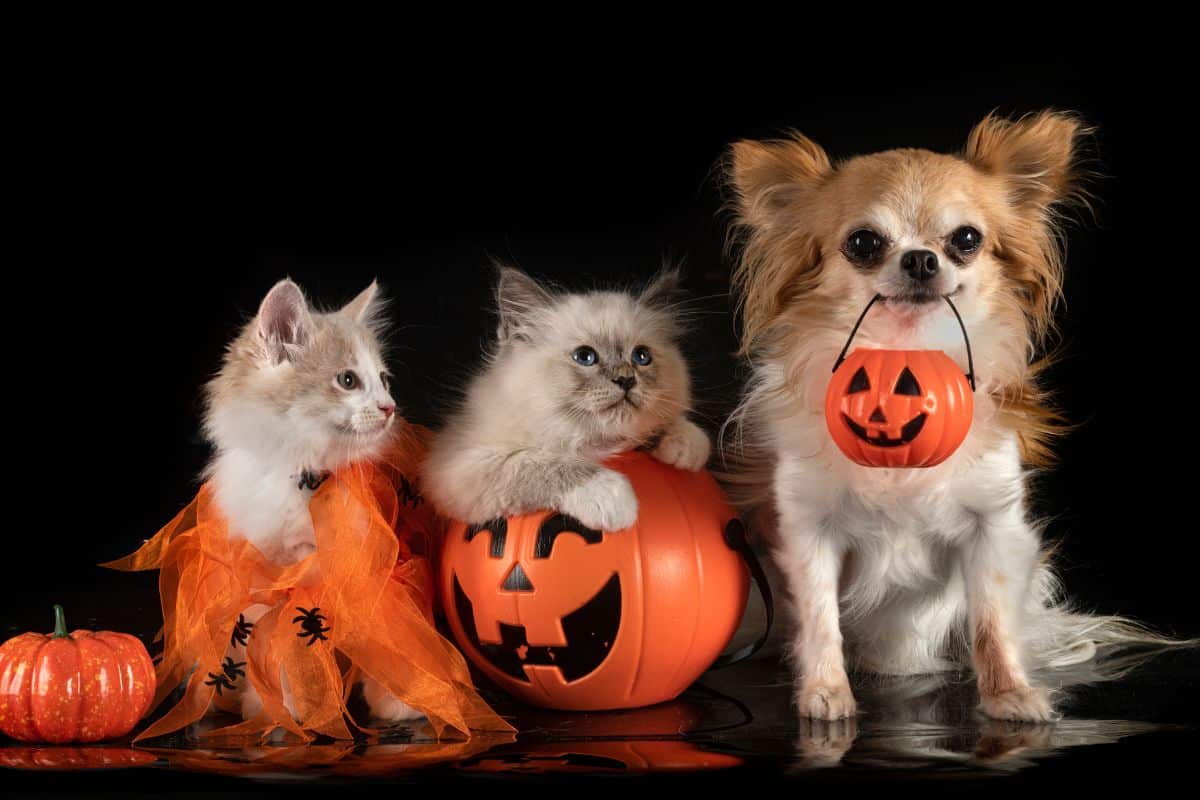
Halloween can be fun for families, but pets may experience the evening very differently. Doorbells ring repeatedly. Costumed strangers appear at the door. Children shout outside, decorations move unexpectedly, and unfamiliar sounds continue well after dark.
For some dogs and cats, these changes cause mild nervousness that settles once the house becomes quiet. Other pets experience a much stronger stress response. They may tremble, hide, pant, pace, vocalize, refuse food, or desperately try to escape.
Knowing the difference between temporary Halloween nerves and anxiety that needs veterinary attention can help you protect your pet throughout the celebration.
Why Does Halloween Make Some Pets Anxious?
Pets generally feel more secure when their surroundings and routines are predictable. Halloween can disrupt both at once.
A normally quiet front door may suddenly become the busiest part of the house. Costumes can make familiar people look unfamiliar. Flashing decorations, masks, unusual scents, loud voices, and neighborhood activity can add to the confusion.
Dogs may become particularly alert when people repeatedly approach their territory. Cats may respond by disappearing into a hiding place and refusing to come out.
Pets with an existing fear of strangers or loud noises may have an especially difficult evening. Senior pets can also struggle with sudden environmental changes, particularly if they have changes in vision, hearing, or cognitive function.
What Does Mild Halloween Stress Look Like?
Not every nervous behavior is an emergency. A pet experiencing mild stress may:
- Stay closer to you than usual
- Hide temporarily
- Startle when the doorbell rings
- Bark at visitors
- Avoid unfamiliar people
- Show less interest in playing
- Seek a quiet room
- Become slightly restless
The important detail is how your pet recovers.
A mildly nervous pet should generally become more comfortable when the trigger disappears. For example, a dog that barks when trick-or-treaters arrive but settles afterward may simply be responding to unusual activity.
Stress becomes more concerning when the reaction is intense, persists, or interferes with normal behavior.
What Are the Signs of Significant Anxiety in Pets?
Pet anxiety can affect both behavior and the body. Watch for changes that are noticeably different from your pet’s usual response to visitors or noise.
Persistent Panting or Pacing
Dogs may pant after activity or when they are warm. Anxiety-related panting can occur even when your pet has not exercised, and the room is comfortable.
Constant pacing is another sign that your pet cannot settle. A dog may repeatedly move between rooms, circle an area, or follow you closely without relaxing.
Trembling or Shaking
Some pets shake when they are frightened. Occasional trembling during a loud event may stop once your pet reaches a quieter area.
Continuous or severe shaking deserves closer attention, especially when accompanied by weakness, breathing changes, vomiting, pain, or unusual responsiveness.
Excessive Drooling
Fear can cause some dogs to drool more than usual. Heavy drooling, however, should not automatically be blamed on anxiety.
Toxin exposure, nausea, oral pain, and other medical problems can also cause drooling. Halloween increases the risk of pets getting into candy, wrappers, decorations, and other unsafe items.
Destructive Escape Behavior
A frightened pet may scratch doors, push through screens, jump fences, or attempt to squeeze through small openings.
This behavior can quickly become dangerous. Pets can injure their paws, teeth, nails, or bodies while trying to escape. They can also run outside when the front door opens for visitors.
Hiding and Refusing to Come Out
Cats often hide when something frightens them. Many will emerge once the environment becomes calm again.
Pay attention when hiding continues well beyond the stressful event or occurs with refusal to eat, drink, or use the litter box normally.
Loss of Appetite
A nervous pet may ignore a meal or treat temporarily. Continued refusal to eat after the stressful situation has ended deserves attention.
Loss of appetite can have many causes besides anxiety. A veterinarian in Pompano Beach can evaluate persistent appetite changes and determine whether another medical problem could be involved.
When Does Halloween Anxiety Need Veterinary Attention?
The severity and duration of your pet’s symptoms matter.
Contact a veterinarian when anxiety becomes difficult to control, your pet cannot settle after the trigger is gone, or physical symptoms develop.
Veterinary attention is particularly important if you notice:
- Difficulty breathing or abnormal breathing
- Collapse or severe weakness
- Repeated vomiting or diarrhea
- Injury caused by an escape attempt
- Extreme agitation that does not improve
- Significant changes in responsiveness
- Persistent refusal to eat or drink
- Suspected ingestion of candy, medication, decorations, or another harmful item
- Sudden behavior that is dramatically different from normal
Some of these signs can occur with medical conditions unrelated to fear. Assuming that every unusual behavior is “just anxiety” could delay necessary treatment.
If you are unsure what you are seeing, contacting a vet near you can help you determine whether your pet should be examined.
Could a Medical Problem Look Like Anxiety?
Yes. This is one reason sudden or severe behavioral changes deserve careful attention. Pain can make a pet restless, withdrawn, irritable, or unusually vocal. Breathing problems can cause panting and an inability to settle. Digestive problems may cause pacing, drooling, or hiding.
Halloween introduces additional concerns. Dogs may find chocolate, sugar-free candy, discarded food, wrappers, glow products, or other objects while family members are distracted.
If unusual behavior begins suddenly, consider what happened immediately beforehand. Think about whether your pet could have eaten something, become injured, or experienced another health problem.
A veterinary examination may be necessary when the cause is unclear.
How Can You Make Halloween Less Stressful for Your Pet?
Preparation can reduce many common Halloween stressors.
Create a Quiet Room
Choose a comfortable room away from the front door. Add your pet’s bed, water, familiar toys, and other items associated with rest.
Cats should have access to their usual litter box.
Reduce Doorbell Triggers
If the doorbell causes an immediate fear response, minimize its use when possible. Meeting trick-or-treaters outside or placing a sign asking visitors not to ring can reduce repeated triggers.
Keep Pets Indoors
Halloween is not an ideal evening for unsupervised outdoor time. Frequent visitors and unusual neighborhood activity can frighten even pets that normally stay close to home.
Secure doors, gates, windows, and screens before trick-or-treating begins.
Do Not Force Your Pet to Socialize
A frightened pet should not be required to greet costumed visitors. Allow your pet to stay at a comfortable distance. Forcing interaction can increase fear and may cause a normally friendly animal to react defensively.
Maintain the Normal Routine
Keep meals, bathroom breaks, walks, and bedtime as close to their normal schedule as practical. Familiarity can help make an unusual evening feel more manageable.
Should You Give Your Pet Something to Calm Them Down?
Do not give your pet human anxiety medication, sleep aids, supplements, or other medications unless a veterinarian specifically directs you to do so. Products that are safe for people may be inappropriate or dangerous for pets. Even pet products may not be right for every animal.
If your dog or cat has a history of severe fear during Halloween, fireworks, thunderstorms, or other noisy events, discuss the problem with a veterinarian before the next predictable trigger. Planning ahead gives your veterinarian time to evaluate your pet and discuss appropriate management options.
What Should You Do After Halloween?
Most mildly nervous pets should return to their usual behavior after the excitement ends. Give your pet access to a quiet environment and monitor eating, drinking, bathroom habits, activity, breathing, and behavior.
If your pet remains unusually withdrawn, restless, fearful, aggressive, or uninterested in food, do not automatically assume they simply need more time. A vet near you can help determine whether persistent behavioral changes are related to stress or another health concern.
Help Your Pet Feel Safer This Halloween
Halloween anxiety can range from temporary nervousness to severe distress. Recognizing your pet’s normal behavior makes it easier to spot when their response has gone beyond ordinary fear.
For families looking for a veterinarian in Pompano Beach, Acacia Animal Hospital provides comprehensive veterinary care, including urgent care for sudden health concerns. The hospital has served pets in the Pompano Beach community since 1968 and provides preventive, diagnostic, medical, surgical, and other veterinary services.
If Halloween stress leaves you concerned about your pet’s behavior or physical health, contact us at 954-942-5955. The practice also accommodates pet emergencies to the best of its abilities and recommends calling ahead when possible.
Frequently Asked Questions
1. How long does it take a pet to calm down after Halloween?
Ans: A mildly anxious pet may begin relaxing soon after visitors, noise, and other triggers stop. Some pets need longer. Contact a veterinarian if fear remains intense, your pet cannot settle, or abnormal behavior continues alongside physical symptoms.
2. Should I comfort my dog when they are scared on Halloween?
Ans: Yes. You can provide calm companionship if your dog seeks you out. Give them access to a quiet, familiar space and avoid forcing interactions with visitors. The goal is to help your dog feel secure without exposing them unnecessarily to frightening situations.
3. Can Halloween anxiety cause vomiting or diarrhea in pets?
Ans: Stress can sometimes contribute to gastrointestinal changes. However, vomiting or diarrhea should not automatically be attributed to anxiety. Halloween also creates opportunities for pets to eat candy, food, wrappers, or other inappropriate items. Repeated or severe symptoms require veterinary attention.
4. Where can I take my anxious pet in Pompano Beach?
Ans: Acacia Animal Hospital serves pets in Pompano Beach and surrounding communities and offers comprehensive veterinary services, including urgent care. If your pet develops severe or unusual symptoms, call the hospital so the team can help determine the appropriate next step.
5. Can Acacia Animal Hospital help if my pet’s behavior suddenly changes after Halloween?
Ans: Yes. Acacia Animal Hospital provides veterinary care for acute and chronic concerns and offers diagnostic services when appropriate. A veterinary examination can help determine whether a sudden behavioral change may be associated with stress, pain, illness, or another health problem.
6. Does Acacia Animal Hospital provide urgent veterinary care in Pompano Beach?
Ans: Yes. Acacia Animal Hospital lists both urgent and emergency veterinary care among its services. The practice advises owners experiencing an emergency to call ahead when possible so the team can prepare for their arrival.