
Keeping your dog’s teeth clean is one of the most important parts of their overall health care routine. While many pet owners focus on nutrition, exercise, and grooming, dental care is often overlooked until there’s a serious problem. Poor oral hygiene can lead to plaque buildup, bad breath, gum disease, tooth loss, and even health complications affecting the heart, liver, and kidneys.
At Acacia Animal Hospital in Pompano Beach, we believe prevention is the key to lifelong wellness. Learning how to brush your dog’s teeth properly can help prevent painful dental disease and keep your furry companion happier and healthier for years to come.
In this guide, we’ll explain why dental care matters, what supplies you need, and how to brush your dog’s teeth step by step.
Why Brushing Your Dog’s Teeth Is Important
Dogs naturally develop plaque on their teeth after eating. If plaque is not removed regularly, it hardens into tartar, which can lead to gingivitis and periodontal disease. In fact, many dogs show signs of dental disease by the age of three.
Regular brushing helps:
- Reduce plaque and tartar buildup
- Prevent bad breath
- Protect gums and teeth
- Lower the risk of painful infections
- Improve overall health and comfort
- Reduce the need for extensive dental procedures later
Good oral hygiene also helps your dog maintain a healthy appetite and quality of life.
Signs Your Dog May Have Dental Problems
It’s important to recognize early signs of oral health issues before they become severe. Common symptoms include:
- Persistent bad breath
- Yellow or brown tartar on teeth
- Red or swollen gums
- Drooling more than usual
- Difficulty chewing
- Pawing at the mouth
- Loose or missing teeth
- Bleeding gums
- Reduced appetite
If you notice any of these symptoms, your dog should be evaluated by a veterinarian.
How Often Should You Brush Your Dog’s Teeth?
Daily brushing is ideal for maintaining optimal oral health. However, even brushing a few times per week is significantly better than not brushing at all.
Consistency matters more than perfection. Establishing a routine early in your dog’s life can make brushing easier and less stressful.
Puppies generally adapt quickly to dental care routines, but older dogs can learn too with patience and positive reinforcement.
What You Need Before Brushing
Before you begin, gather the proper dental care supplies designed specifically for dogs.
Dog Toothbrush
Choose a soft-bristled toothbrush made for pets. Options include:
- Finger toothbrushes
- Long-handled dog toothbrushes
- Double-sided brushes for different tooth sizes
Human toothbrushes may be too hard for your dog’s gums.
Dog Toothpaste
Never use human toothpaste on dogs. Human toothpaste often contains ingredients like xylitol or fluoride that can be toxic to pets.
Dog toothpaste comes in pet-friendly flavors such as chicken, beef, or peanut butter, making brushing more enjoyable.
Treats and Positive Reinforcement
Rewarding your dog during and after brushing helps create a positive association with the experience.
Step-by-Step Guide to Brushing Your Dog’s Teeth
Step 1: Let Your Dog Get Comfortable
Start slowly by allowing your dog to sniff and taste the toothpaste. This helps reduce anxiety and builds trust.
Choose a calm environment without distractions. Speak gently and keep the experience relaxed.
Step 2: Introduce Mouth Handling
Before using a toothbrush, gently lift your dog’s lips and touch their teeth and gums with your finger.
Practice this daily for a few minutes until your dog becomes comfortable with mouth handling.
Step 3: Apply Toothpaste to the Brush
Place a small amount of dog toothpaste on the toothbrush. Allow your dog to lick a little off first if needed.
This creates familiarity with the flavor and texture.
Step 4: Begin Brushing Slowly
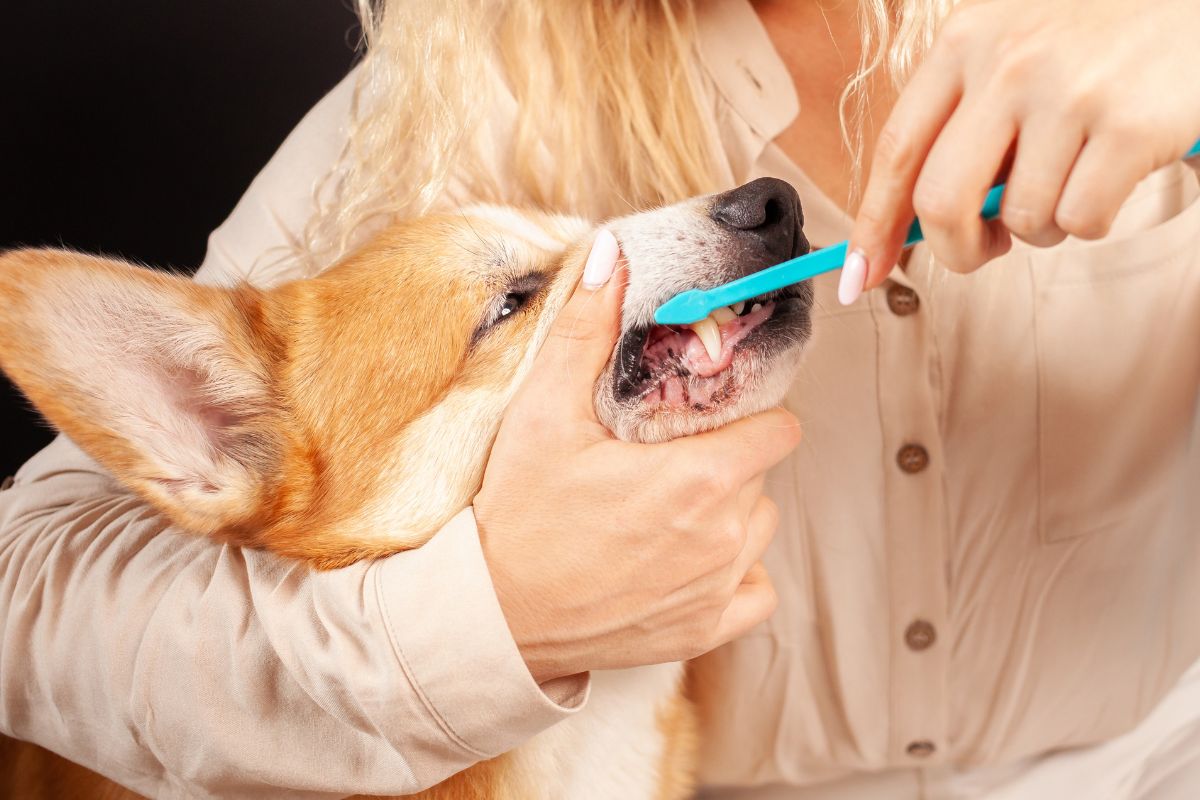
Hold the toothbrush at a 45-degree angle against the gum line. Use gentle circular motions to clean the outer surfaces of the teeth.
Focus on:
- Upper back teeth
- Canines
- Gum line areas where plaque accumulates most
Most dogs tolerate brushing of the outer tooth surfaces better than the inside surfaces.
Step 5: Keep Sessions Short
Initially, brush for only 30 seconds to one minute. Gradually increase the duration as your dog becomes more comfortable.
Short, positive sessions are more effective than long stressful ones.
Step 6: Reward Your Dog
Always end brushing sessions with praise, affection, or a healthy treat.
Positive reinforcement helps your dog associate brushing with good experiences.
Tips for Making Teeth Brushing Easier
Start Young If Possible
Puppies adapt to routines quickly. Early dental care can make lifelong oral hygiene much easier.
Stay Consistent
Brushing at the same time each day helps your dog know what to expect.
Be Patient
Some dogs may need several days or weeks before becoming comfortable with brushing.
Never Force Your Dog
If your dog becomes stressed or fearful, stop and try again later. Forcing the process can create long-term anxiety.
Use Dental Treats and Toys
Dental chews and approved oral care toys can help reduce plaque between brushings, although they should not replace brushing entirely.
Common Mistakes Pet Owners Make
Using Human Toothpaste
Human toothpaste can be dangerous for dogs and should always be avoided.
Brushing Too Aggressively
Hard brushing can irritate gums and cause discomfort. Gentle pressure works best.
Ignoring Dental Warning Signs
Bad breath is not normal in dogs. Persistent odor may indicate dental disease.
Only Brushing Occasionally
Infrequent brushing allows plaque to harden into tartar quickly.
Skipping Professional Dental Exams
Even with excellent home care, professional dental evaluations remain important.
Professional Dental Care for Dogs
Routine veterinary dental exams are essential for detecting problems that may not be visible at home.
Professional dental cleanings may include:
- Oral examinations
- Scaling and polishing
- Dental X-rays
- Tooth extractions if necessary
- Treatment for infections or gum disease
If your dog has significant tartar buildup, bleeding gums, or oral pain, professional cleaning may be recommended.
Pet owners in Pompano Beach who are concerned about their dog’s dental health can book an appointment with the veterinary team at Acacia Animal Hospital for a comprehensive oral health evaluation.
Dental Care Beyond Brushing
Brushing is the foundation of oral care, but additional habits can further support healthy teeth and gums.
Provide Dental Diets
Certain veterinary-approved diets are designed to reduce plaque accumulation.
Offer Safe Chew Toys
Chewing can naturally help reduce tartar buildup while keeping dogs mentally stimulated.
Schedule Regular Wellness Exams
Routine checkups allow veterinarians to monitor your dog’s oral health over time.
The Long-Term Benefits of Good Dental Hygiene
Consistent dental care offers more than just fresher breath. It can significantly improve your dog’s comfort, health, and longevity.
Benefits of regular dental care include:
- Less pain and discomfort
- Lower risk of gum disease
- Better overall health
- Reduced veterinary expenses over time
- Improved eating and chewing ability
- Healthier, happier quality of life
Investing a few minutes each day in brushing your dog’s teeth can make a major difference throughout their lifetime.
FAQs
1. How often should I brush my dog’s teeth?
Ans: Daily brushing is recommended, but brushing at least three to four times weekly can still provide significant benefits.
2. Can I use human toothpaste for my dog?
Ans: No. Human toothpaste may contain toxic ingredients for dogs, including xylitol and fluoride. Always use toothpaste made specifically for pets.
3. What if my dog refuses to let me brush their teeth?
Ans: Start slowly with gentle mouth handling and positive reinforcement. Some dogs need time to become comfortable with brushing routines.
4. Are dental chews enough to keep my dog’s teeth clean?
Ans: Dental chews can help reduce plaque buildup, but they should not replace regular brushing and professional dental care.
5. When should my dog have a professional dental cleaning?
Ans: Your veterinarian will recommend cleanings based on your dog’s age, oral health, and tartar buildup. Many adult dogs benefit from routine professional cleanings.
6. Is bad breath normal in dogs?
Ans: No. Persistent bad breath is often a sign of dental disease, infection, or other health issues and should be evaluated by a veterinarian.