
When your pet comes home after surgery, proper aftercare plays a major role in ensuring a smooth and successful recovery. Whether your dog or cat underwent a routine spay/neuter procedure, dental surgery, soft tissue operation, or orthopedic treatment, attentive post-operative care can help reduce complications, minimize discomfort, and support faster healing.
At Acacia Animal Hospital in Pompano Beach, we understand how stressful surgery and recovery can feel for pet owners. Knowing what to expect during the healing process can help you feel more confident and prepared while supporting your furry companion every step of the way.
Understanding the First 24 Hours After Surgery
The first day after surgery is often the most important part of your pet’s recovery. Your pet may still feel groggy, sleepy, or slightly uncoordinated due to anesthesia. Some pets may whine, appear restless, or have a decreased appetite temporarily.
During this time:
- Keep your pet in a quiet and comfortable area
- Limit activity and excitement
- Provide soft bedding away from stairs or slippery floors
- Monitor them closely for unusual symptoms
- Offer small amounts of water and food as directed by your veterinarian
It’s normal for pets to sleep more than usual after surgery, but they should gradually become more alert within 24 hours.
Creating a Comfortable Recovery Space
A calm recovery environment helps reduce stress and prevents unnecessary movement that could interfere with healing.
For dogs, choose a confined area such as a crate, playpen, or small room where they can rest comfortably. Cats often recover best in a quiet room away from other pets and household activity.
Your pet’s recovery area should include:
- Clean, soft bedding
- Easy access to water
- Limited jumping opportunities
- Comfortable room temperature
- Minimal noise and distractions
Avoid allowing pets to run, jump, or play too soon, even if they appear energetic.
Managing Your Pet’s Pain Safely
Pain management is a critical part of post-surgical care. Your veterinarian may prescribe medications to help control discomfort and inflammation.
Always follow medication instructions carefully, including:
- Correct dosage
- Timing and frequency
- Whether medication should be given with food
- Completing the full prescribed course
Never give human pain medications to pets unless specifically instructed by your veterinarian. Many over-the-counter medications that are safe for humans can be toxic to animals.
Signs your pet may still be uncomfortable include:
- Whining or vocalizing
- Restlessness
- Panting excessively
- Refusing food
- Hiding
- Aggression or irritability
- Limping or reluctance to move
If pain appears uncontrolled, contact your veterinarian promptly.
Monitoring the Surgical Incision
Checking your pet’s incision daily is essential during recovery. Mild redness and slight swelling can be normal initially, but the incision should gradually improve over time.
Watch for signs of complications such as:
- Excessive redness
- Swelling
- Bleeding
- Discharge or pus
- Foul odor
- Open stitches
- Increased warmth around the area
Prevent your pet from licking, chewing, or scratching the incision. Excessive licking can introduce bacteria and delay healing.
Why the Cone Matters
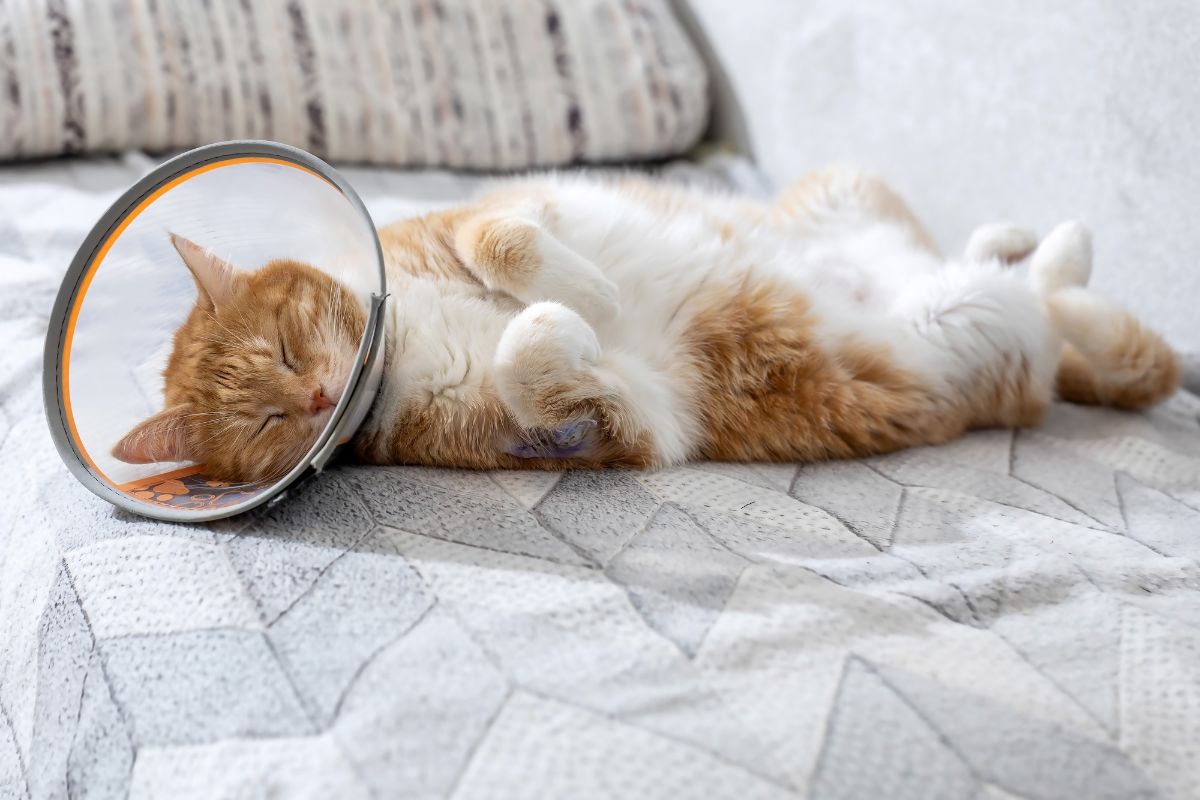
Many pets dislike wearing an Elizabethan collar (cone), but it serves an important purpose. Preventing access to the surgical site helps reduce the risk of infection, irritation, and reopened stitches.
Alternative recovery options may include:
- Inflatable recovery collars
- Recovery suits
- Soft cones
However, your veterinarian can recommend the safest option based on your pet’s specific procedure.
Feeding Your Pet After Surgery
Some pets experience mild nausea after anesthesia, so appetite changes can be common during the first day.
To help your pet eat comfortably:
- Offer smaller meals initially
- Provide bland or veterinarian-approved food if recommended
- Ensure fresh water is always available
- Avoid treats or rich foods unless approved
Most pets regain normal appetite within 24 to 48 hours. If your pet refuses food for more than a day or experiences vomiting or diarrhea, contact your veterinarian.
Restricting Activity During Recovery
Even active pets need restricted movement after surgery. Too much activity can cause swelling, delayed healing, or reopening of the incision.
Activity restrictions may include:
For Dogs
- Short leash walks only
- No running or rough play
- No swimming
- Avoid stairs when possible
For Cats
- Keep indoors only
- Prevent jumping onto furniture
- Separate from active pets
The recovery timeline varies depending on the type of surgery. Some procedures require only a few days of rest, while orthopedic surgeries may require several weeks of limited activity.
Keeping Follow-Up Appointments
Recheck visits allow your veterinarian to monitor healing and remove sutures if needed. These appointments are important even if your pet appears fully recovered.
During follow-up exams, your veterinarian may:
- Assess incision healing
- Adjust medications
- Monitor mobility
- Identify early signs of complications
- Recommend gradual return to normal activity
If your pet had a major procedure, physical rehabilitation or additional diagnostics may also be recommended.
Warning Signs You Should Never Ignore
Although most pets recover smoothly, complications can occur. Contact your veterinarian immediately if you notice:
- Difficulty breathing
- Pale gums
- Severe lethargy
- Persistent vomiting
- Refusal to eat or drink
- Excessive bleeding
- Sudden swelling
- Fever
- Collapse
- Signs of severe pain
Early intervention can prevent more serious complications and improve recovery outcomes.
Emotional Support During Recovery
Pets can feel anxious, confused, or stressed after surgery. Gentle reassurance and patience can make a big difference during recovery.
Ways to comfort your pet include:
- Speaking calmly
- Maintaining a familiar routine
- Offering quiet companionship
- Avoiding overstimulation
- Providing favorite blankets or toys
Some pets become clingy, while others prefer extra rest and solitude. Respecting their comfort level helps support emotional healing as well as physical recovery.
Helping Senior Pets Recover
Older pets may require additional support after surgery because healing can take longer with age. Senior pets may also have underlying health conditions that affect recovery.
Extra considerations for senior pets include:
- Softer bedding for joint comfort
- Assistance with mobility
- Careful medication monitoring
- Frequent hydration checks
- Close observation for appetite changes
Your veterinarian may provide customized recovery instructions based on your pet’s age and medical history.
The Importance of Following Veterinary Instructions
Every surgery and every pet are different. Following your veterinarian’s instructions closely is the best way to support safe healing and reduce the risk of complications.
Post-operative care instructions may cover:
- Medication schedules
- Feeding recommendations
- Exercise restrictions
- Incision monitoring
- Bandage care
- Follow-up visits
If you ever feel uncertain about your pet’s recovery, don’t hesitate to ask questions or seek guidance.
At Acacia Animal Hospital, our team is committed to helping pets recover safely and comfortably after surgery. If your pet needs surgical care or post-operative support in Pompano Beach, you can book an appointment with our experienced veterinary team for personalized care and guidance.
FAQs
1. How long does it take for a pet to recover after surgery?
Ans: Recovery time depends on the procedure and your pet’s overall health. Minor surgeries may heal within 10–14 days, while orthopedic procedures can take several weeks or months.
2. Is it normal for my pet to sleep a lot after surgery?
Ans: Yes, increased sleepiness is common after anesthesia and surgery. Most pets gradually regain normal energy levels within 24 to 48 hours.
3. Can I remove my pet’s cone at night?
Ans: It’s generally safest to keep the cone on at all times unless your veterinarian advises otherwise. Pets can lick or chew incisions quickly, even while unsupervised for short periods.
4. What should I do if my pet won’t eat after surgery?
Ans: Mild appetite loss can be normal for the first day. Offer small meals and fresh water. If your pet refuses food for more than 24 hours, contact your veterinarian.
5. How do I know if my pet’s incision is infected?
Ans: Signs of infection may include redness, swelling, discharge, bad odor, heat, or reopening of the incision. Contact your veterinarian if you notice any of these symptoms.
6. When can my pet return to normal activity?
Ans: Your veterinarian will provide guidance based on the surgery performed. Most pets need restricted activity for at least 10–14 days during initial healing.